Business intent
POs and SMEs define what the product must do.
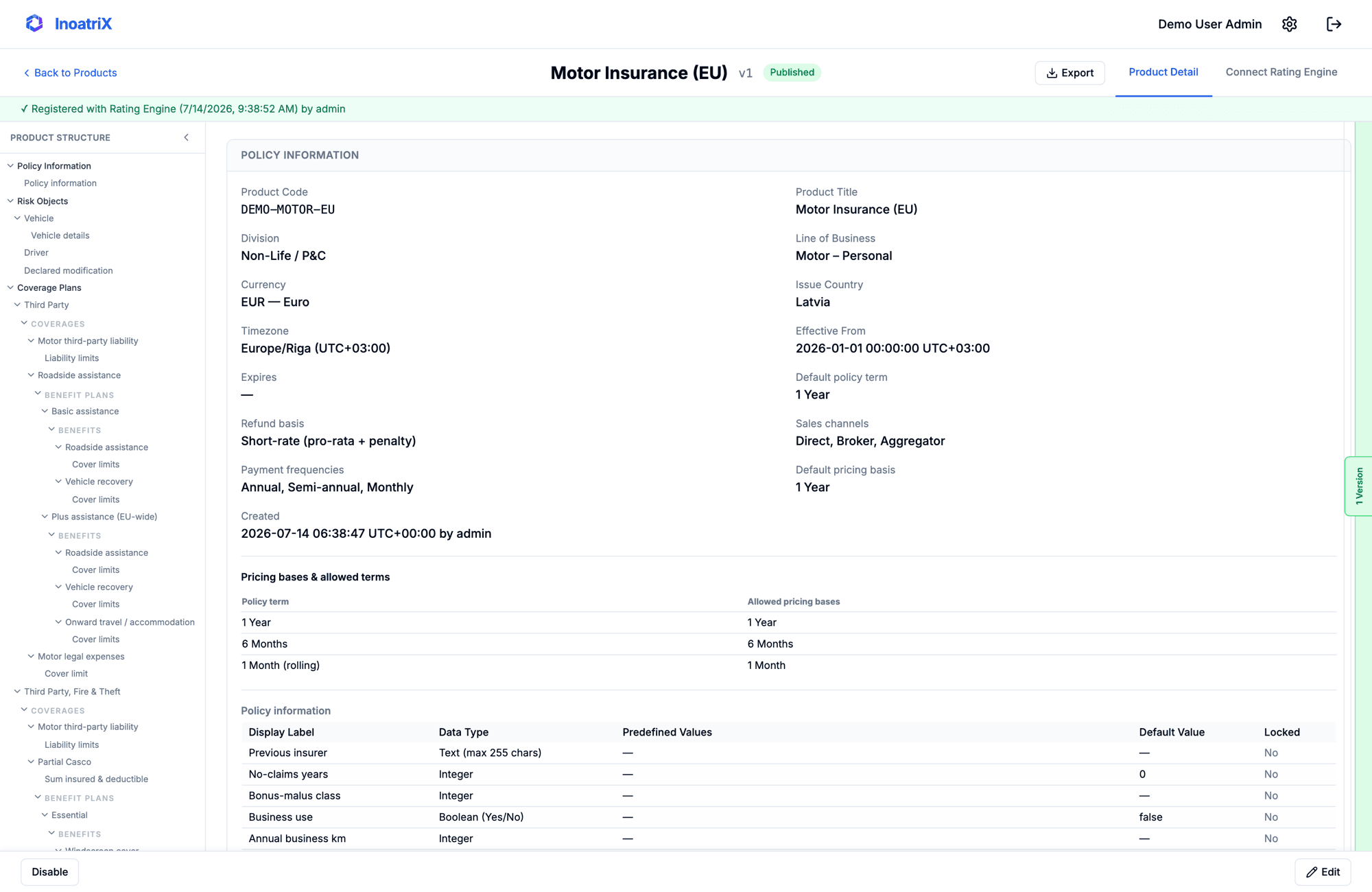
This is my independent, self-directed AI coding tool exploration that naturally evolved in a working proof of concept for a next level Insurance Policy Product administration & Pricing platform where Insurance Products can be configured by AI Agent. One shared model, no product-specific code, AI-native configuration, human-controlled publication.
Business vision. AI execution.

Product owners and domain experts describe what a product must do. Those decisions then pass through requirements, handoffs and application changes. Product differences become duplicated logic, slowing launches and making every later change more expensive and risky.
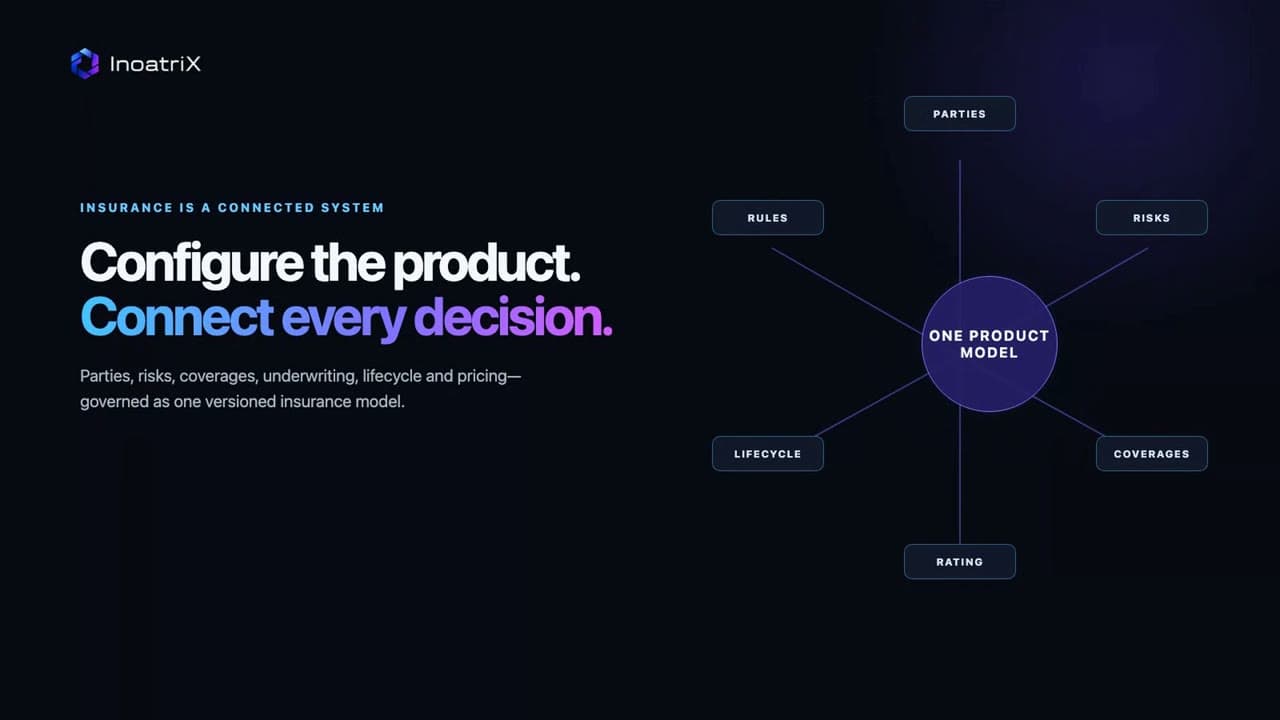
THE CONFIGURATION-FIRST SHIFTProduct differences should belong in governed configuration, not in application code.
POs and SMEs define what the product must do.
Decisions are translated across teams and artefacts.
Product differences become code and duplicated logic.
The breakthrough IS NOT an AI agent coding another product specific implementation. It is the truly configurable insurance core concept that ENABLES the AI agent to configure all product structure, underwriting rules, it's lifecycle transactions and pricing algorithms through a governed MCP and API tools.
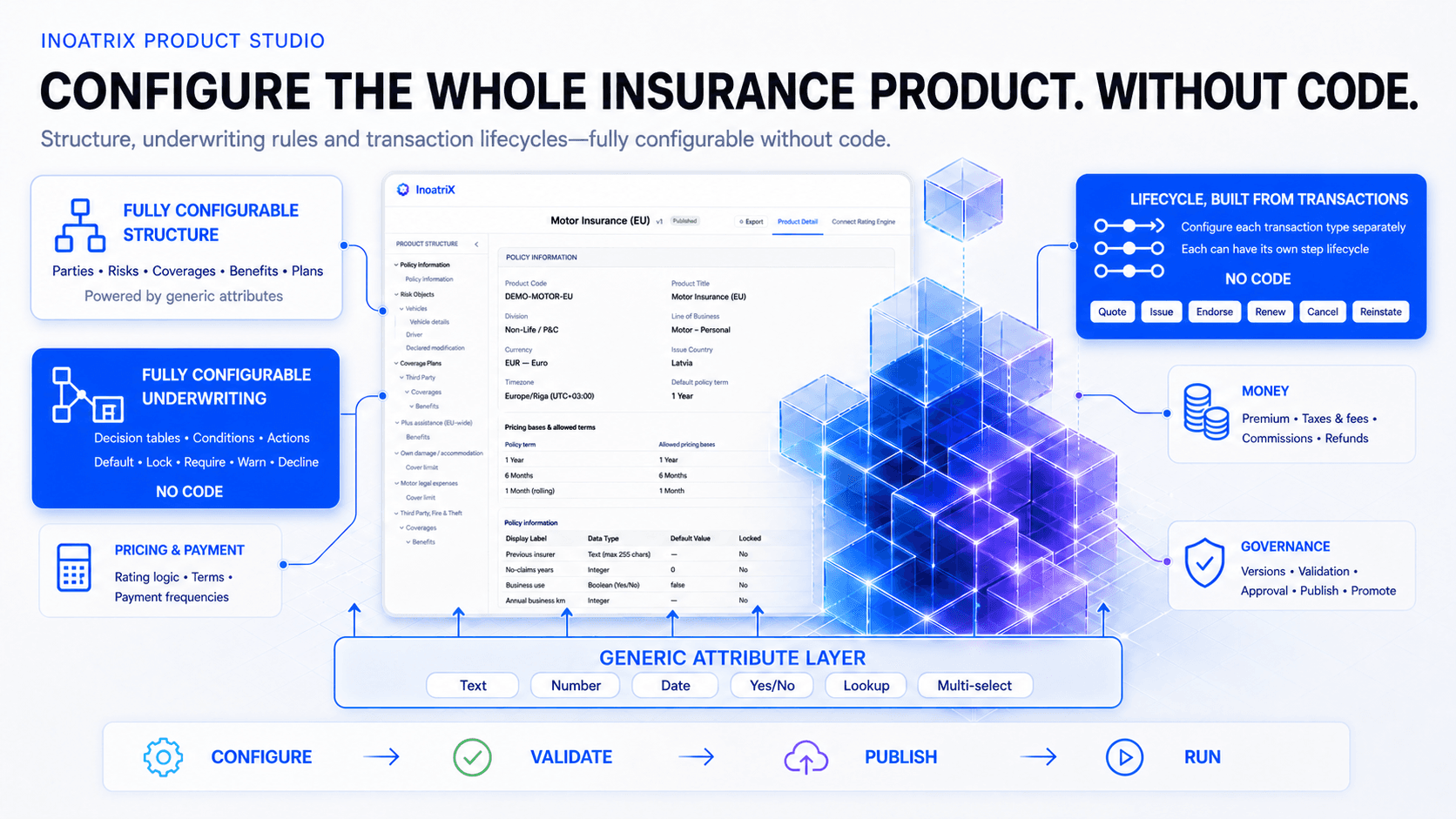
This is what unlocks the AI path. The agent configures the same governed product model through the MCP server—without product-specific codebase changes or direct database access.
With the configurable core in place, Carrier or MGA teams can work directly with an AI agent aware of insurance context and live platform's capabilities. Furthermore AI agent is able to ask clarification questions in business language and even provide recommendations & suggestions, then use governed MCP tools to configure and validate the actual product directly in a safe UAT environment.
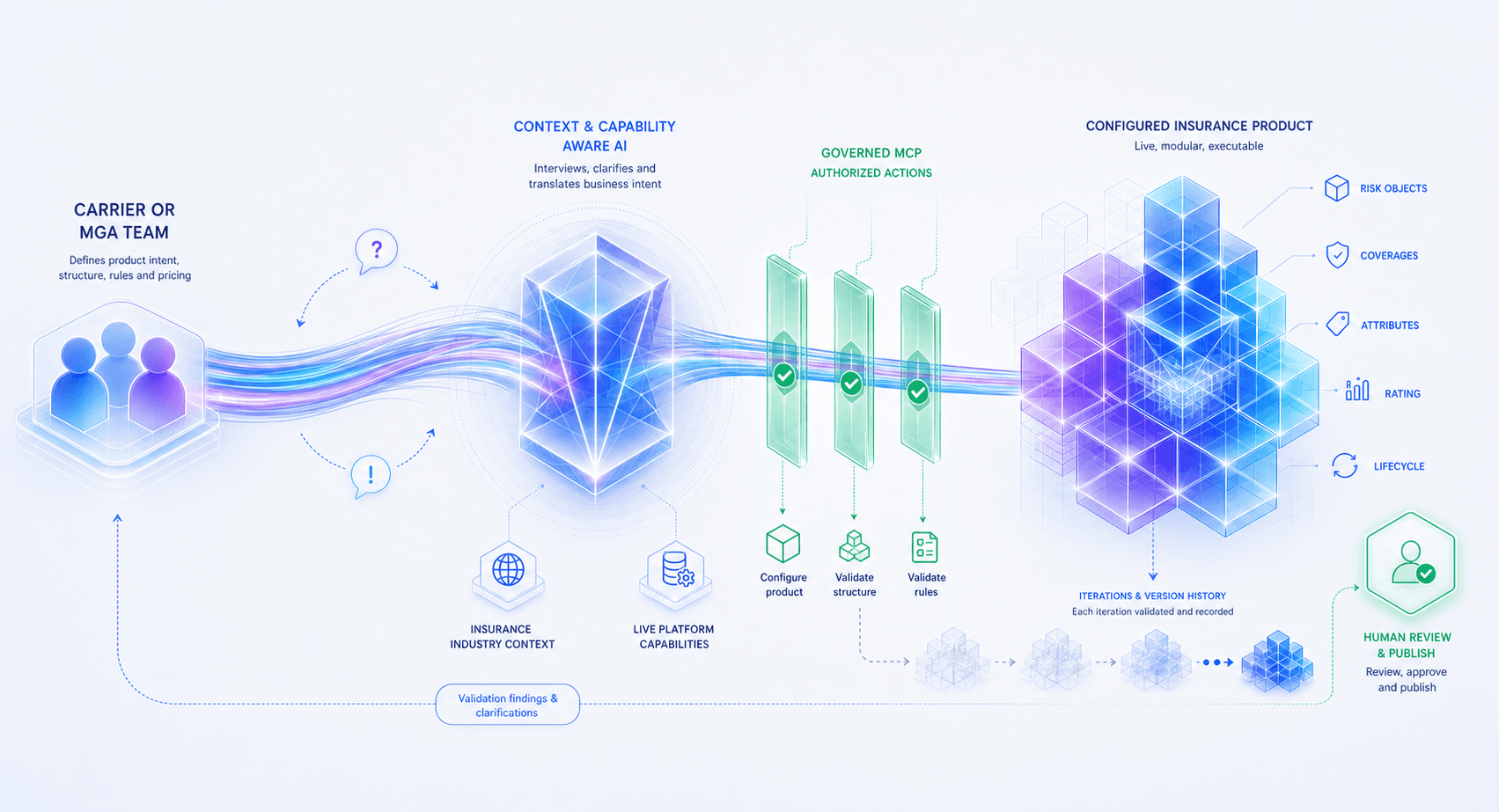
The business conversation does not end with a requirements document or code change. It ends in a testable insurance product configuration.
A Carrier or MGA team defines intent, structure, rules and pricing.
Understands industry context and what the platform can configure.
Performs strictly authorized product configuration actions.
Builds the product and validates its structure and rules.
Human review & test in UAT and decide when to promote to production.
Visual authoring is primary. API and AI are alternate authorized paths to the exact same validated configuration—versioned, auditable and reusable.

If you work with insurance products, pricing or platform architecture, I'd be glad to connect and exchange perspectives.